VideoLingo is an open-source video-localization tool combining transcription, translation and optional dubbing. It runs through a browser interface after installation and needs a compatible translation model; external services may charge fees.
Who is VideoLingo for?
For video creators and localization workers comfortable configuring models and a runtime. Subtitles and dubbing still need review.
Free access
↗
The open-source program is free; models, dubbing services and runtime resources are separate.
Platforms
WindowsmacOSLinuxWeb UI (local)
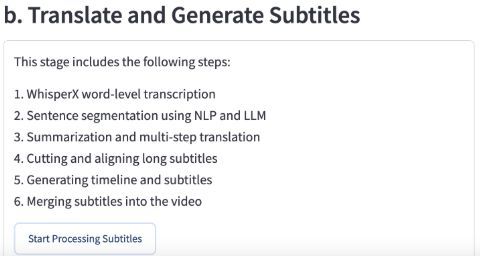
Transcribe and translate
Recognize speech, translate subtitles and segment them for reading.
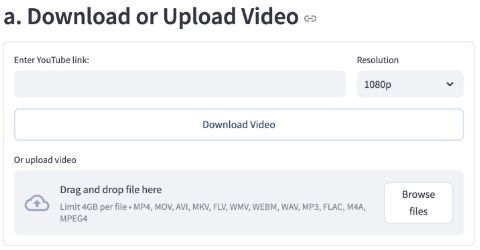
Import video material
Import video you have permission to process and start the subtitle workflow.
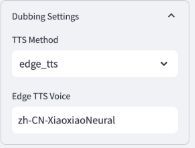
Choose a dubbing method
Choose synthesis by language and provider, then check timing.
VideoLingo
VideoLingo FAQs
Install the runtime, obtain recognition models and configure a translation model supporting the required structured output. Dubbing needs a TTS option; local speed depends on hardware.
No. Model APIs, some dubbing services and compute can cost money, depending on your choices.
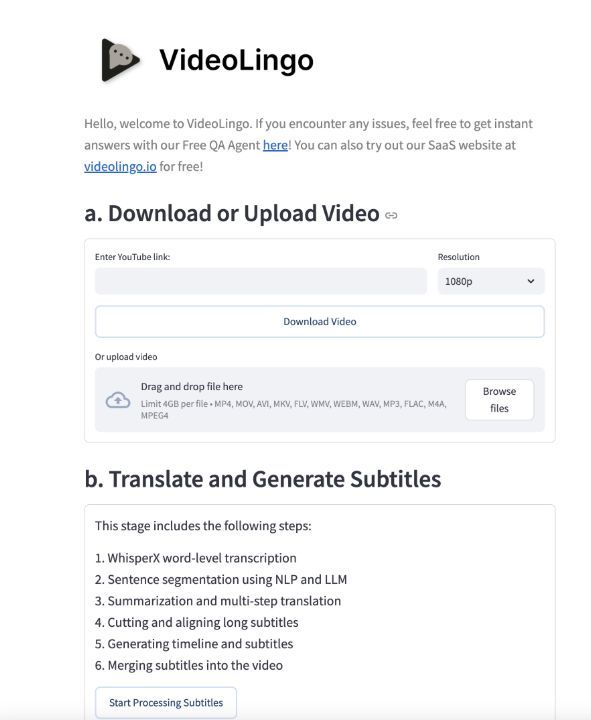
The official repository retains an older UI screenshot. Current docs use Qwen3-ASR with ForcedAligner by default; the image is not evidence of the current default configuration.
It depends on configuration. Remote translation receives relevant text; online recognition or dubbing may receive audio and text. Check providers and content permissions first.
VideoLingo plans and pricing
Open source
$0.00one-time
The open-source program is free; models, dubbing services and runtime resources are separate.
Compute / external services
Unverified
Costs depend on your model and provider; hosted plan prices and free quotas are not assumed.
VideoLingo
Connect AI transcription, subtitle translation, segmentation and dubbing.



 Windows
 macOS
 Linux